The Instagram comments were unanimous. "He's so thicc!" "What a chonky boy!" "Absolute unit!" My golden retriever, Cooper, had become something of a minor celebrity in my social circle, not because he could do tricks or win agility competitions, but because he was round. Roly-poly. Plump in a way that the internet found adorable and my veterinarian found alarming.
I'm Ethan Barrett. I live in Denver, Colorado, where the dogs are as active as their owners and the veterinary care is excellent but expensive. I built petcalcentral.com because I was tired of the disconnect between what pet owners see and what their pets actually need. Cooper was my wake-up call. He was also, briefly, my denial.
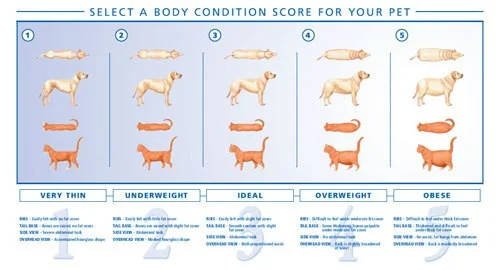
Cooper weighed 87 pounds. For a male golden retriever, the breed standard says 65-75 pounds. My vet, Dr. Chen, didn't mince words. "He's obese," she said, pointing to the body condition chart on her wall. "Not chubby. Not fluffy. Obese. And it's going to cost him years." I wanted to argue. I wanted to tell her about the comments, about how everyone loved his "thicc" physique, about how he was just big-boned. But I had seen the chart. And I knew she was right.
Pet obesity is an epidemic that gets almost no attention compared to human obesity. In 2026, an estimated 60% of dogs and 56% of cats in the United States are overweight or obese. That's not a cosmetic issue. It's a medical crisis. Obese dogs live an average of 2.5 years less than their healthy-weight counterparts. They develop arthritis at younger ages. They're at higher risk for diabetes, heart disease, respiratory problems, and certain cancers. And yet, the cultural narrative around fat pets is still dominated by words like "cute," "adorable," and "thicc."
The body condition score (BCS) is the veterinary standard for assessing pet weight, and it's far more useful than a number on a scale. It uses a 9-point scale, where 4-5 is ideal. At a score of 5, you should be able to feel your dog's ribs with gentle pressure, see a waist when viewed from above, and notice an abdominal tuck from the side. Cooper was a 7. His ribs were buried under a layer of fat. His waist had disappeared. His belly hung low and round. He looked, to the untrained eye, like a happy, well-fed dog. To a veterinarian, he looked like a patient.
The internet's obsession with fat pets is a relatively recent phenomenon. Ten years ago, "chonky" wasn't a word anyone used. Now it's a genre of content with millions of followers. There are social media accounts dedicated entirely to overweight animals, and the comments are overwhelmingly positive. "Goals." "Me." "He's perfect." This isn't harmless fun. It's the normalization of a preventable disease, and it's killing pets.
I was part of the problem. I overfed Cooper because he begged, and his begging was theatrical. The whining. The paw on my knee. The eyes — those golden retriever eyes that seem to contain the entire history of human-canine companionship. I gave him table scraps because it made him happy. I gave him extra treats because I felt guilty leaving him alone during the day. I gave him a full bowl of food because the bag said "feed according to weight" and I was bad at measuring. Every act of love was, in fact, an act of harm.
Dr. Chen put Cooper on a weight management plan. Not a diet — dogs don't do well with crash diets, and rapid weight loss can cause liver problems. A gradual reduction. We measured his food with a kitchen scale, not a scoop. We cut treats by 70% and replaced them with carrots and green beans. We increased his walks from twenty minutes to forty-five, adding hills for intensity. And we tracked his weight weekly, not daily, because weight fluctuates and daily checks make you crazy.
The first month was brutal. Cooper begged more. He searched the kitchen floor for crumbs like a forensic investigator. He sat by his empty food bowl with a level of theatrical sadness that would have won an Oscar. I felt like a monster. But I also noticed something: his energy improved. He was eager to walk. He played more. He didn't pant as heavily on warm days. The weight loss was slow — about a pound a week — but the quality of life change was immediate.
By month four, Cooper was down to 74 pounds. His BCS had dropped from 7 to 5. His ribs were palpable. His waist was visible. He ran up the stairs without stopping. And the Instagram comments changed. "He looks so healthy!" "What a transformation!" "How did you do it?" The same audience that had celebrated his obesity now celebrated his recovery. The internet, I realized, doesn't actually care about your dog's health. It cares about the story. And I had finally told the right one.
The pet food industry is complicit in this epidemic. Portion recommendations on bags are often inflated — they want you to buy more food. Treats are marketed as "rewards" and "love," with calorie counts buried in fine print. Some dental chews contain as many calories as a full meal. And the premium, grain-free, boutique diets that cost $80 a bag? They're often higher in calories than standard kibble. Pet owners are paying premium prices to make their pets fat.
I built the tools on this site because I needed them. The pet BMI calculator gave me a number I couldn't argue with. The body condition scorer taught me what to look for. The calorie calculator showed me exactly how much Cooper should eat, which was about 30% less than I had been feeding him. These aren't complicated tools. But they require something most pet owners don't have: the willingness to be honest about what their pet actually needs, rather than what feels good in the moment.
Cooper is 8 years old now. He's lean, active, and — I can say this objectively — still very cute. The internet would probably call him "fit" now, which is a different kind of compliment. But the real compliment is the one from Dr. Chen at his last checkup: "Whatever you're doing, keep doing it. He's in perfect shape."
If your vet says your pet is overweight, believe them. The internet is not a doctor. "Thicc" is not a diagnosis. And love, real love, sometimes means saying no to the begging.
When was the last time you felt your pet's ribs?