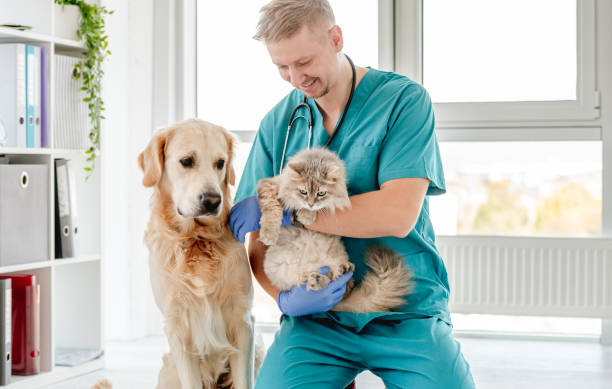
I was examining a cat named Mittens last week when her owner said the sentence I hear at least once a day: "But she loves her dry food." Mittens weighed 16 pounds. She's a domestic shorthair. She should weigh 10. Her owner was feeding her a premium dry food that cost $45 a bag. Premium. As if the price tag changes the nutritional content.
Here's the thing about dry cat food: it's basically a bag of carbohydrates with some protein sprinkled on top. Most dry foods are 30-50% carbs. Cats are obligate carnivores. They evolved to eat meat, not grains. Their bodies don't process carbohydrates efficiently. And when you feed a carnivore a high-carb diet, they get fat. It's not complicated. It's biology.
Wet food is different. It's 70-80% water, which mimics the natural moisture content of prey. It's higher in protein, lower in carbs. And cats on wet food diets are significantly less likely to be overweight. I've seen it in my practice over and over. Switch a cat from dry to wet, and the weight starts coming off. Not because of magic. Because of math. Fewer carbs, more protein, better hydration.
Mittens' owner was skeptical. "Wet food is expensive," she said. "And messy." I ran the numbers for her. The dry food was $45 for a 15-pound bag. The wet food was $1.50 per can, and Mittens needed one can a day. That's $45 a month. The dry food lasted two months, so $22.50 a month. Wet food cost $22.50 more per month. That's $270 a year. For a cat that might live 15 years, that's $4,050 extra over her lifetime.
But then I showed her the cost of treating diabetes. $200-400 a month for insulin, glucose monitoring, and vet visits. The cost of treating arthritis from excess weight. $100-300 a month for medications and supplements. The cost of a shortened lifespan. You can't put a price on that. The wet food was expensive. Diabetes was catastrophic.
Mittens' owner switched to wet food. She called me last week. Mittens is down to 14 pounds. She's more active. She's drinking more water, which is good for her kidneys. And her owner admitted something: "She actually seems happier." Of course she is. She's eating what her body was designed to eat. It's not rocket science. It's just not what the pet food industry wants you to believe.
If you have a cat, please consider wet food. Not because I said so. Because evolution said so. Because biology said so. Because your cat deserves to eat like a cat, not like a grain silo with whiskers.
The pet food industry has done an incredible job convincing us that dry food is "complete and balanced." And technically, it meets minimum nutritional requirements. But meeting minimums isn't the same as optimal nutrition. It's like saying a fast-food burger is "complete" because it has protein, carbs, and fat. Technically true. Not the same as a home-cooked meal with fresh vegetables and lean meat.
I also want to address the "my cat is picky" excuse. Yes, some cats resist wet food initially. They've been conditioned to prefer the crunch and flavor enhancers of dry food. But cats are obligate carnivores. Given enough time and patience, almost every cat will transition to wet food. The key is gradual change. Mix 25% wet with 75% dry for a week. Then 50/50. Then 75/25. Most cats adjust within two weeks. Mittens took ten days. Her owner said day three was the worst — Mittens stared at her bowl like it was an insult. By day ten, she was eating wet food without complaint.
And here's something else: wet food helps with urinary issues. Cats on dry food are chronically dehydrated. Their urine is concentrated. They're prone to crystals, blockages, and kidney disease. Wet food increases water intake naturally, diluting urine and reducing these risks. I've seen cats with recurring urinary issues completely resolve after switching to wet food. No medication. No surgery. Just better hydration through diet. It's preventive medicine that costs less than treating the disease.
— Dr. Rachel Chen